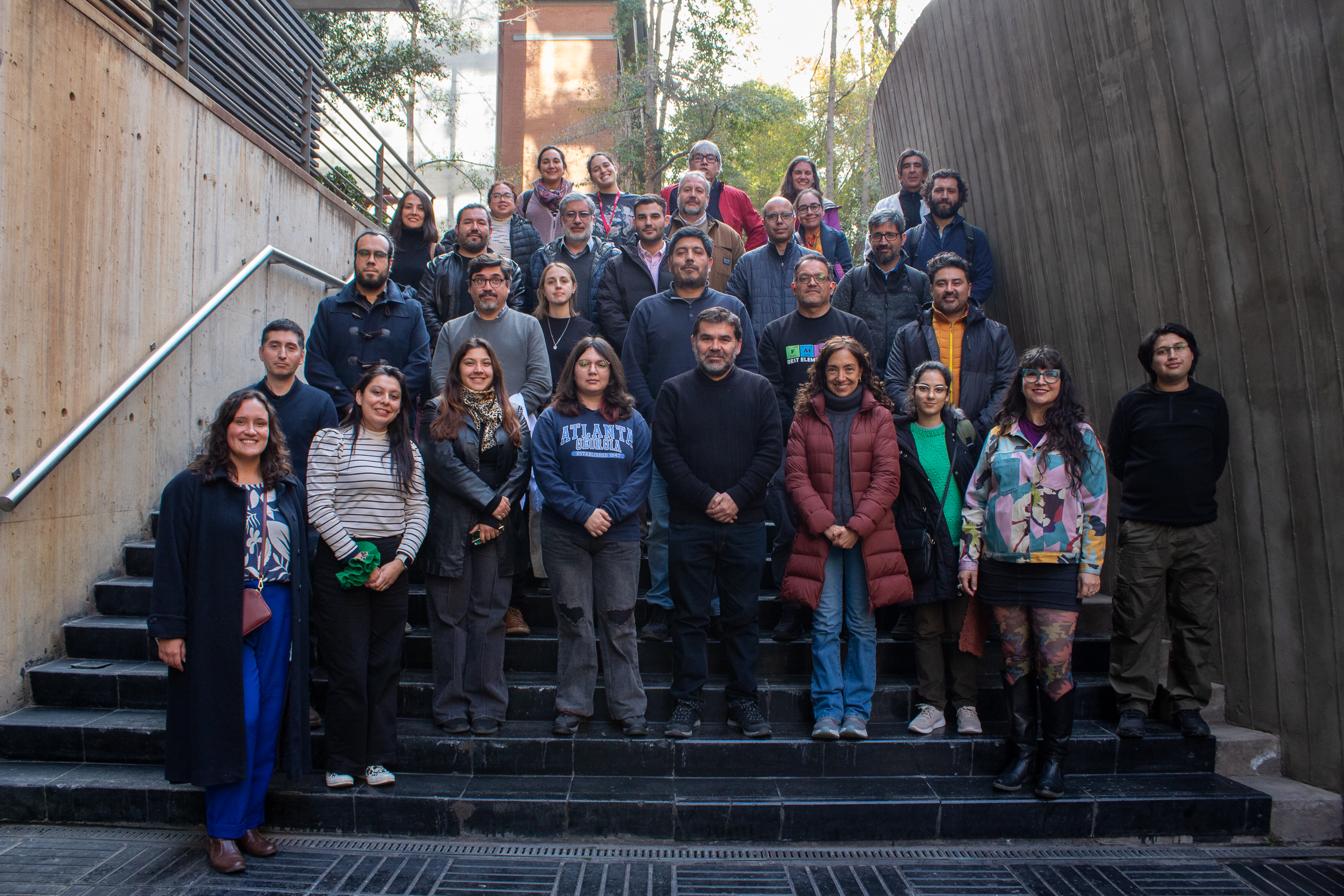
From July 6th to 10th, 2026, Santiago became the meeting point for researchers, educators, and practitioners committed to expanding access to molecular biology tools across Latin America. Hosted at the Pontificia Universidad Católica de Chile (UC Chile), the Reclone Chile Node organized two consecutive workshops in a single week: one open to the broader community and one focused on strengthening the Reclone network itself.
A Regional Gathering Around Cellular Reagents
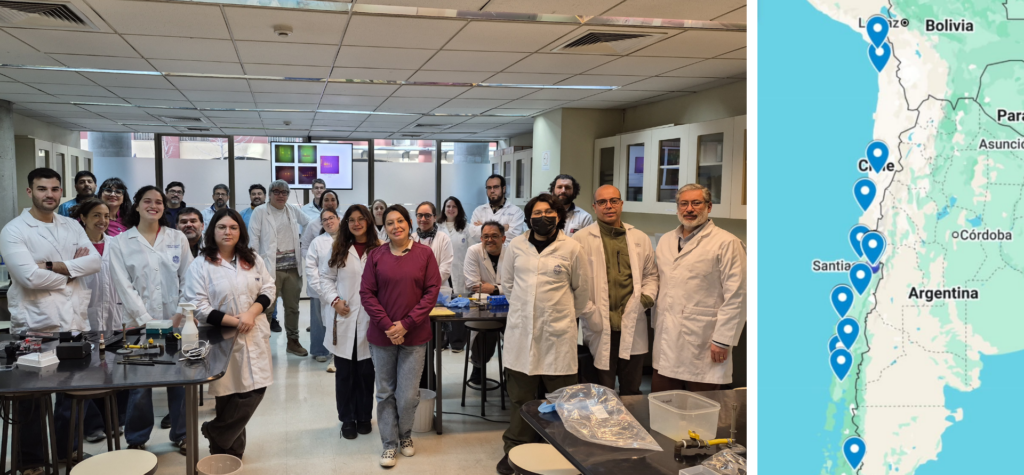
The first workshop brought together over 30 participants from 23 institutions in Chile and four other countries across Latin America for two days of hands-on training in autonomous, low-cost production of molecular biology reagents. Participants were taught about cellular reagents and open-source hardware, learning how to use recombinant bacteria directly as a PCR reagent.
The workshop combined theoretical sessions with laboratory training, covering the principles of cellular reagent production, open-source tools, and strategies for adapting these tools to different institutional contexts. For many participants, the goal was not only to learn the techniques but to return to their institutions as multipliers: educators and researchers who can train others and build local capacity for molecular biology work.
Strengthening the Reclone Network
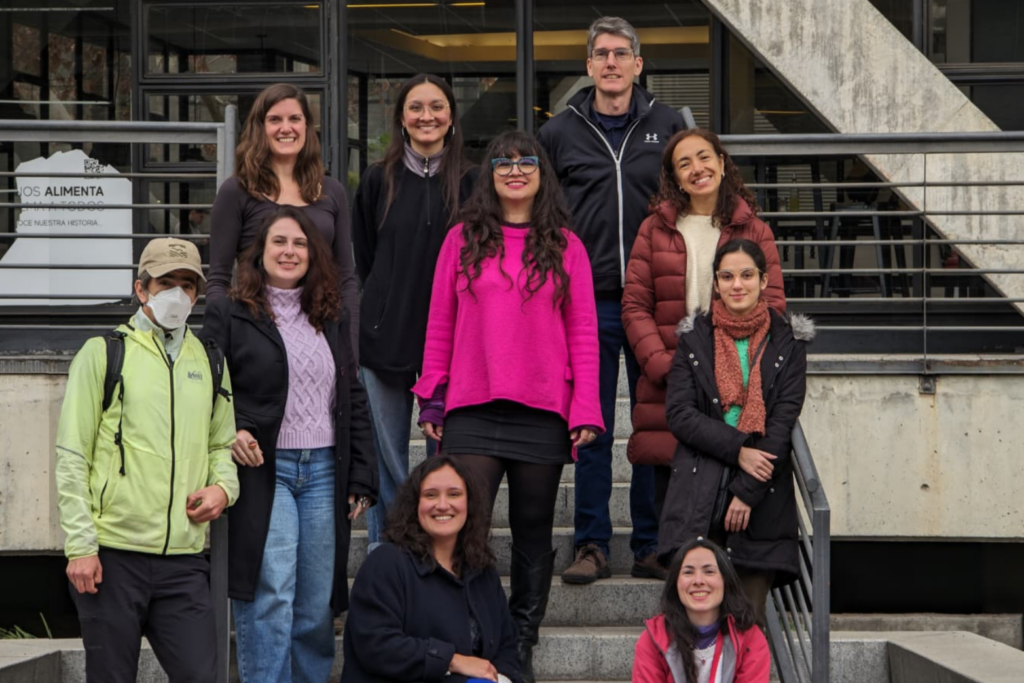
The second workshop shifted focus to the Reclone team itself. Representatives from Argentina (UNCuyo and UBA), Colombia (Uniandes), Peru (UPCH), and Brazil (USP) came together for an internal training centered on Golden Gate Assembly, a modular cloning strategy that enables multiple DNA parts to be assembled simultaneously in a single reaction.
The goal was for every Reclone Hub and Node to train hands-on in the same technique, building a shared technical foundation. The workshop also served as a strategic space, with discussions about how to move the network forward together led by Reclone’s Coordination team, Dr. Jenny Molloy, Dr. Fernán Federici, and Cibele Zolnier.
Looking Ahead
These workshops didn’t emerge in isolation. They were built on months of work across Chile, including open-science workshops run in Puerto Williams, Punta Arenas, and Valdivia. That story is told in Part 2 (coming soon!).
Both trainings were organized by Lab TecLibres. The hands-on training was expertly coordinated by Fernán Federici, Tomás Oliva, and Dominique Schwend.
We are deeply grateful to the Chan Zuckerberg Initiative (CZI) for providing the funding that made this workshop possible, enabling us to bring together participants from across Chile. The event also received valuable support from CYTED, through the work of the Relarus Network within Reclone, further strengthening regional collaboration and advancing our shared mission of making essential research tools more accessible across the continent. Our sincere thanks also go to the Pontificia Universidad Católica de Chile for generously hosting the event and providing access to their laboratory facilities for the hands-on sessions.
Stay connected with Reclone as our network grows! Follow us on Instagram and LinkedIn for the latest updates and opportunities to get involved.
 EN
EN  ES
ES