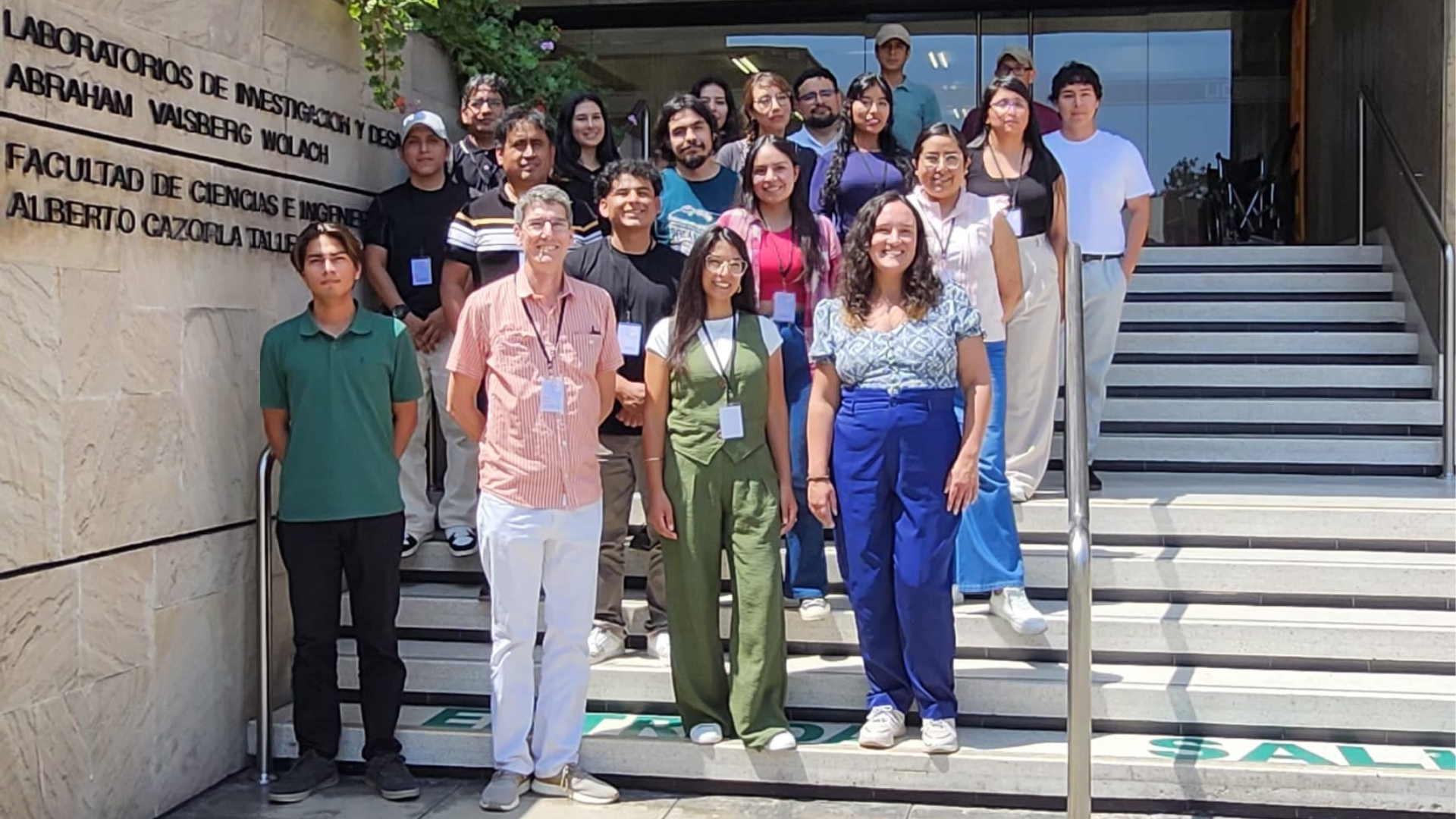
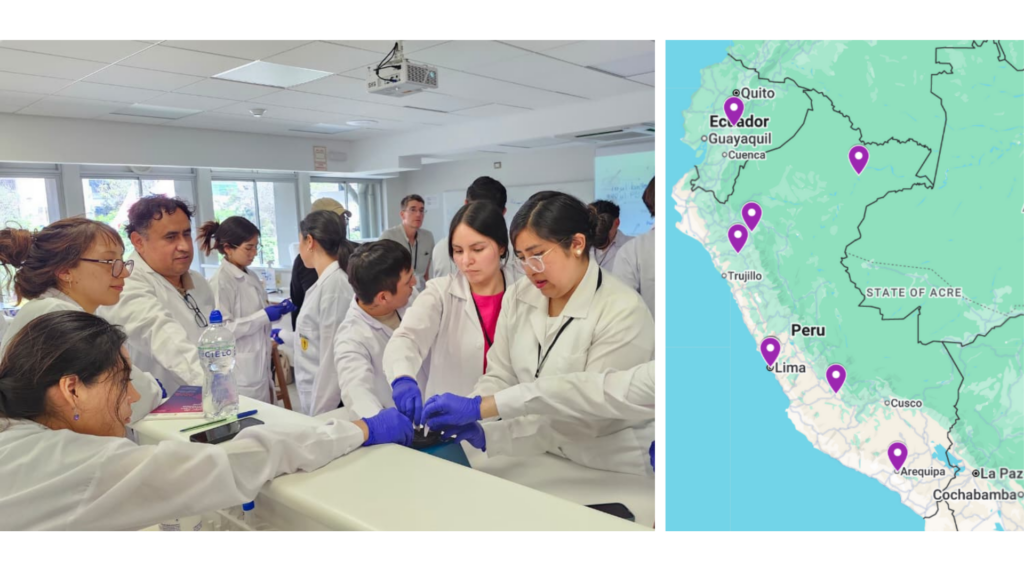
From February 25th to 27th, 2026, Lima (Peru) became the meeting point for researchers interested in local reagent production and open biotechnology. Hosted at Universidad Peruana Cayetano Heredia (UPCH), our #5 Reclone LATAM Workshop brought together participants from different institutions across Peru and from Ecuador to learn practical methods for producing molecular biology enzymes and to connect with the growing Reclone community in Latin America.
The three-day workshop combined lectures, discussions, and hands-on laboratory training, providing participants with both theoretical background and practical experience in recombinant protein expression and enzyme purification.
Why Local Reagent Production Matters
For many laboratories across Latin America, access to molecular biology reagents remains a significant challenge. Importing enzymes and other key materials often involves high costs, complex regulations, and long delivery times, which can slow down research and diagnostics.
The Reagent Collaboration Network (Reclone) aims to address these barriers by enabling laboratories to produce reagents locally and by supporting open sharing of protocols, DNA parts, and expertise. Workshops like this one help build the skills and collaborations needed to strengthen local research capacity.
Hands-on Training at UPCH
The workshop program combined lectures with laboratory sessions focused on the production of OpenVent DNA polymerase, a thermostable enzyme widely used in PCR. Participants were introduced to the principles of recombinant protein expression, including plasmid design, expression vectors, and strategies for inducing protein production in bacterial systems. The training then moved to the laboratory, where participants worked through the enzyme production pipeline step by step.
During the hands-on sessions, participants carried out bacterial culture growth, protein expression, cell lysis, and purification of the enzyme. These practical sessions also created space for discussions on adapting protocols to different laboratory contexts, troubleshooting common technical challenges, and identifying opportunities for implementing local reagent production workflows in participants’ institutions.
Building Connections Across the Region
Beyond the laboratory training, the workshop also introduced participants to the broader Reclone ecosystem, including the collection of open genetic parts and the OpenMTA framework, which facilitates the sharing of biological materials between institutions.
Participants discussed how these tools could support research, teaching, and diagnostic development in their own laboratories. The workshop also created opportunities for researchers to exchange experiences about the challenges of reagent access and explore potential collaborations within the growing Reclone network in Latin America.
Looking Ahead
The enthusiasm and engagement of participants highlighted a shared goal: strengthening local capacity for biotechnology research and education in Peru and across the region.
By combining hands-on technical training with open science principles, workshops like this help expand the network of researchers working toward more accessible and collaborative scientific infrastructure in Latin America.
This workshop was hosted by Universidad Peruana Cayetano Heredia (UPCH) and organized by the Reclone Peru Node. Local organization was led by Daniel Guerra Giraldez and Diego Hidalgo, with support from Allison Lozano, Bryan Chero, and Nathaly Noriega. Mariángeles Ávila and Vanessa Gaona from the Reclone Regional Hub at Universidad Nacional de Cuyo (UNCuyo) also contributed to the training and hands-on sessions.
We are deeply grateful to the Chan Zuckerberg Initiative (CZI) for providing the funding that made this workshop possible, enabling us to bring together participants from across Latin America.
Stay connected with Reclone Latin America as this movement grows! Follow us on Instagram and LinkedIn for the latest updates and opportunities to get involved.
 EN
EN  ES
ES